Trust beats volume. Why credibility is becoming the new currency of communication
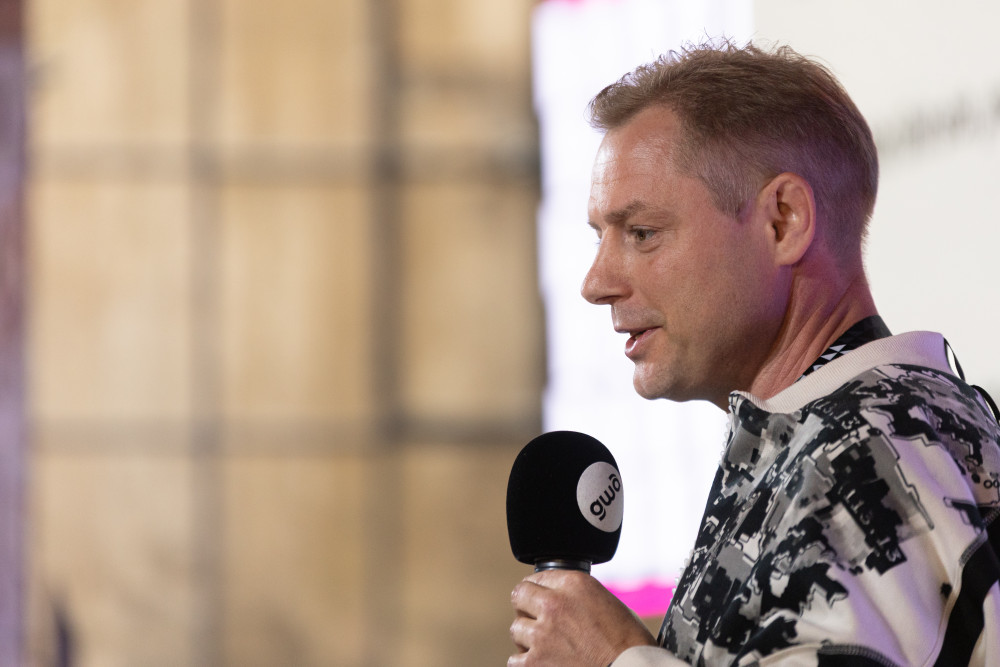
AI generates flawless-looking text, images, and voices in seconds. That’s exactly why authenticity is suddenly more valuable than ever. At this year’s MACHN-Festival, our CEO Benedict Rehbein explained why credibility is becoming the most important currency in communication—and what that means for agencies like PIO in the future. For those who couldn’t attend, here are the key takeaways from the keynote speech.
The MACHN Festival is a two-day business festival in Leipzig that brings together people from the creative industries, academia, and technology to rethink innovation and leadership in Eastern Germany. In 2026, the festival took place from June 3 to 4.
Fake content is nothing new. What is new is just how easy it has become to manipulate content—or even create it out of thin air. As the volume of AI-generated content explodes, trust is declining. And this is precisely where the role of communication is shifting—for brands and agencies alike.
In this article, you’ll learn:
why it’s not the quality, but the sheer volume of AI-generated content that’s the real problem;
why even well-crafted AI-generated content often leaves us colder than human-created content, even when the latter is fictional;
how the role of agencies is shifting from “Public Relations” to “People Relations”;
and which five building blocks will be crucial for authenticity in the future.
200 years of trust-building are now over
In 1826, Joseph Nicéphore Niépce spent eight hours focusing light from his courtyard onto an asphalt-coated tin plate. The result—“Point de vue du Gras” (“View from Le Gras’s Study”)—is considered the world’s oldest surviving photograph. Finally, people could witness events from afar while still holding proof in their hands: This actually happened.
But shortly afterwards, the first images were already being edited, retouched, and manipulated. Fake images are therefore almost as old as photography itself. “Deepfakes” are thus not a modern phenomenon. What is new is their quantity and quality. AI has radically lowered the barriers to entry, and there are hardly any practical limits left. Consequently, the quantity of fakes has long been a bigger problem than their quality: we are drowning in a sea of “AI slop.”
So roughly 200 years have passed between the first photograph and the last video we could still confidently recognize as genuine. A brief span of time during which we could assume that what we saw was actually true.
The fact that this is no longer certain is changing our basic attitude. People today approach information with increasing skepticism. In a very short time, it has become normal to ask ourselves the following questions about almost every piece of content:
Is this real?
and
Who benefits if I believe this?
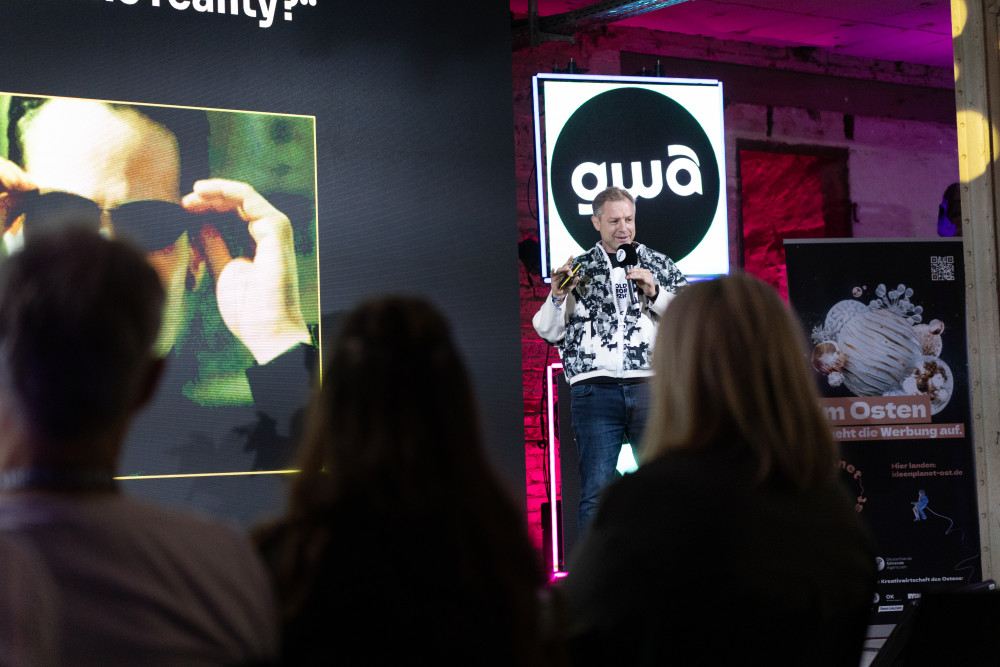
The MACHN Festival embodies shaping the future like no other. What does it mean for our identity as agencies when AI fatigue is already beginning to set in and origin is becoming the key currency of credibility?
What exactly is “good” AI content?
The fact is: No matter how deceptively real AI content may seem, it can’t escape comparison with real, human-created content. The quality of AI content is primarily measured by its ability to deceive us about its own origin. Today, “good” AI content is always the kind that isn’t recognized as AI.
Things get interesting where we already know that something isn’t real: in books, audiobooks, movies, and the like. These have always told fictional stories, played out roles, and “faked” emotions. And yet these fictional stories resonate with us as long as we know they are human-made. AI-generated children’s books or scenes from fictional films recreated with AI, on the other hand, come across as generic. They don’t move us. This creates a paradox: the fictional nature of AI is off-putting, while human-made fiction sparks curiosity.
Credibility is becoming a luxury
AI fatigue had already arrived everywhere. In surveys across 25 countries, a majority of people view AI with concern. The volume of content is growing exponentially—and at the same time, attention spans and credibility are declining.
AI democratizes content production. And that is precisely why credibility is becoming more exclusive than ever:
AI-generated content creates perceptions without a source.
People often reject it, even when “reality” isn’t the issue at all.
Its ubiquity is shifting the role of us agencies.
Authenticity is becoming the new currency of communication.
What remains is an uncomfortable question: How do I even prove anything today if people aren’t there in person? And how do I achieve a sufficiently wide reach when only real experiences matter?
From “Public Relations” to “People Relations”
In this changing world, we as agencies must redefine our role. The old model of merely serving as “style consultants” and "voice boxes" for our clients is no longer relevant. Public Relations is evolving into People Relations.
We at PIO aren’t the only ones seeing this shift. At the PR Day hosted by the professional association DPRG in late May 2026, Digital Minister Karsten Wildberger identified trust—not attention—as the scarcest resource in communication. In a world where anyone can produce seemingly perfect texts, images, and voices in seconds, he said, what matters is no longer who is heard, but who is believed. Communicators, according to Wildberger, are becoming architects of a trust infrastructure.
For this reason, public broadcasting and quality media—keyword: Journalists’ Code of Ethics—are regaining importance. Added to this are tools such as similarity detection, labels for content generated with or by AI, and AI codes of conduct, such as those we have established at PIO.
Authenticity 2026 – Five key elements that matter to agencies today
In the future, success will be measured by different metrics than impressions, reach, and clicks. We will continue to tell compelling stories, but authenticity will take center stage even more in the years ahead. Five elements are central for agencies:
Transparency: Openness about processes, pricing, and limitations.
Consistency: Communication, customer experience, and service are intertwined.
Humanity: Real faces, real voices, real stories.
Social proof: Reviews, testimonials, user-generated content, and community engagement.
Quality: Informative and helpful content instead of attention-grabbing gimmicks
This fundamentally changes the priorities:
Before
More content
More reach
More attention
More campaigns
Tomorrow
More traceability
More community
More real people
More documented processes
More long-term documentation
The new premium currency: Origin
When anyone can generate anything, what matters is no longer how flawless something appears, but where it comes from and who stands behind it. The more synthetic content becomes, the more valuable the authentic becomes: real people, real mistakes, real places, real communities, real experiences.
Or, in short: AI doesn’t make reality irrelevant—it makes it premium.
The next big brands won’t be the loudest, but the most credible. The winners of the AI era won’t be the best generators, but the most trustworthy senders, the most consistent communities, the most human interfaces, and the most transparent organizations.
Brands used to have to be visible.
Now they have to be verifiable.
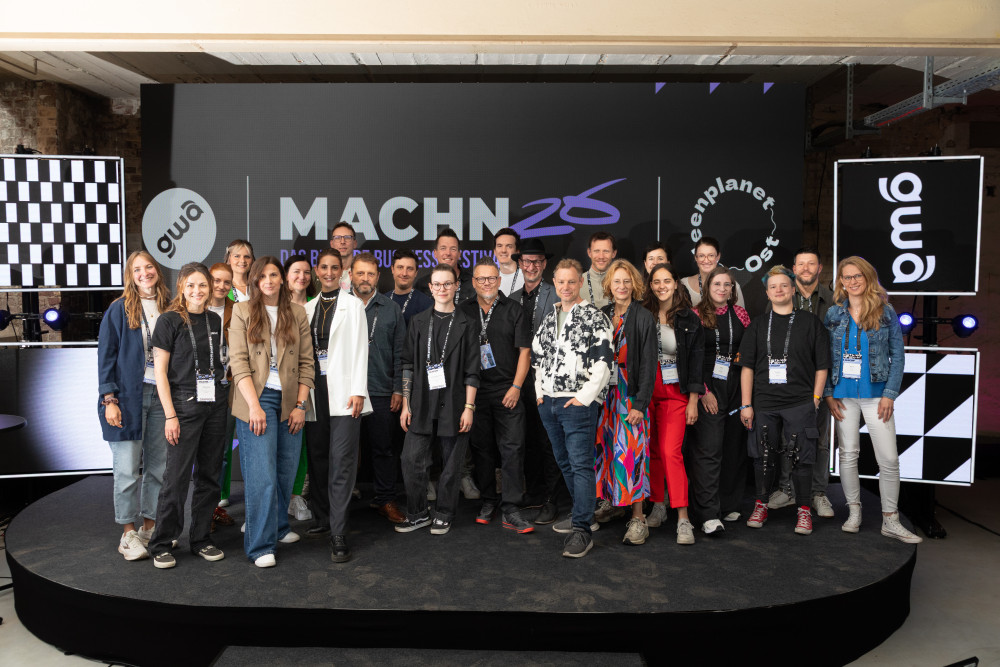
I would like to thank MACHN Festival, GWA, and Ideenplanet Ost for giving me the opportunity to shed light on the topic of trust.
You want to use AI without compromising your credibility?
Did you enjoy this blog post? Then you might also be interested in:



Benedict Rehbein
Benedict Rehbein is the founder and managing director of PIO, the PR agency that asks. With the slogan “What matters?”, PIO communicates what really counts for its clients. Benedict has received awards such as the German PR Report Award for his work.