I, Robot, Michelangelo, and Blue, Blue, Blue – Why Stock Images on the Topic of AI Are So Boring. And How to Do It Better
Tired of seeing the same old stock images when it comes to AI? In this blog post, we’ll give you some tips on how to illustrate your communications on the topic of AI in a better and more varied way.
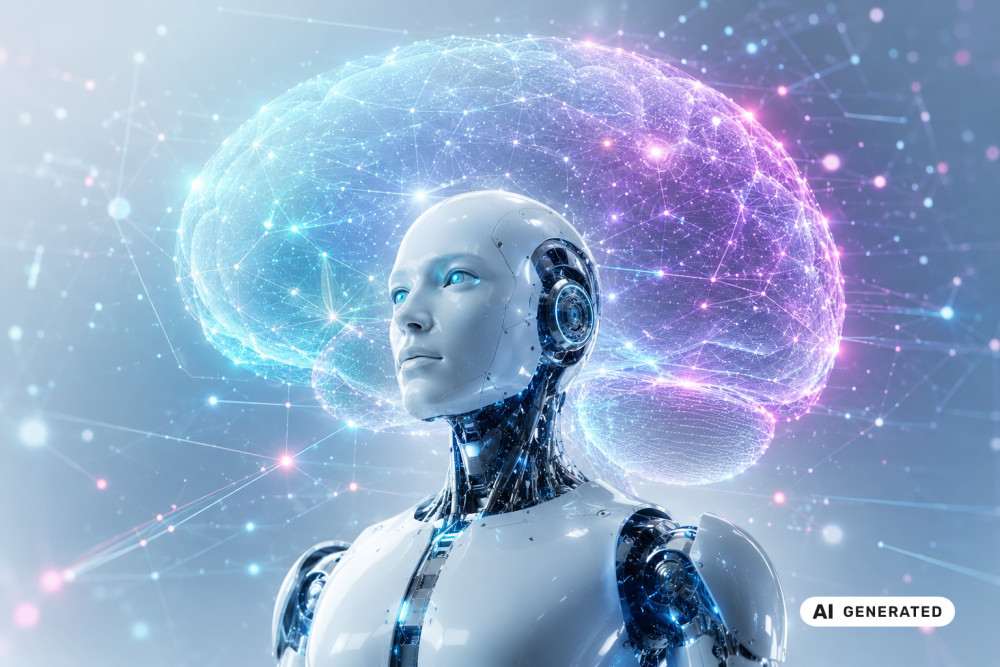
Be honest. If you’ve read or written any articles on artificial intelligence (AI) in recent weeks, how often have you come across images featuring the following elements?
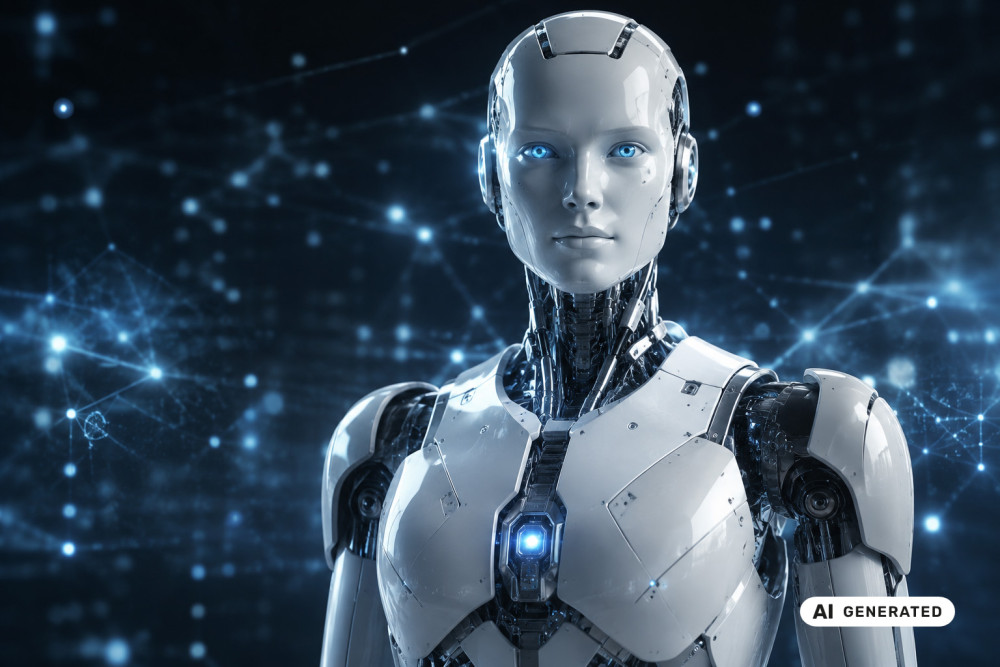
humanoid robots
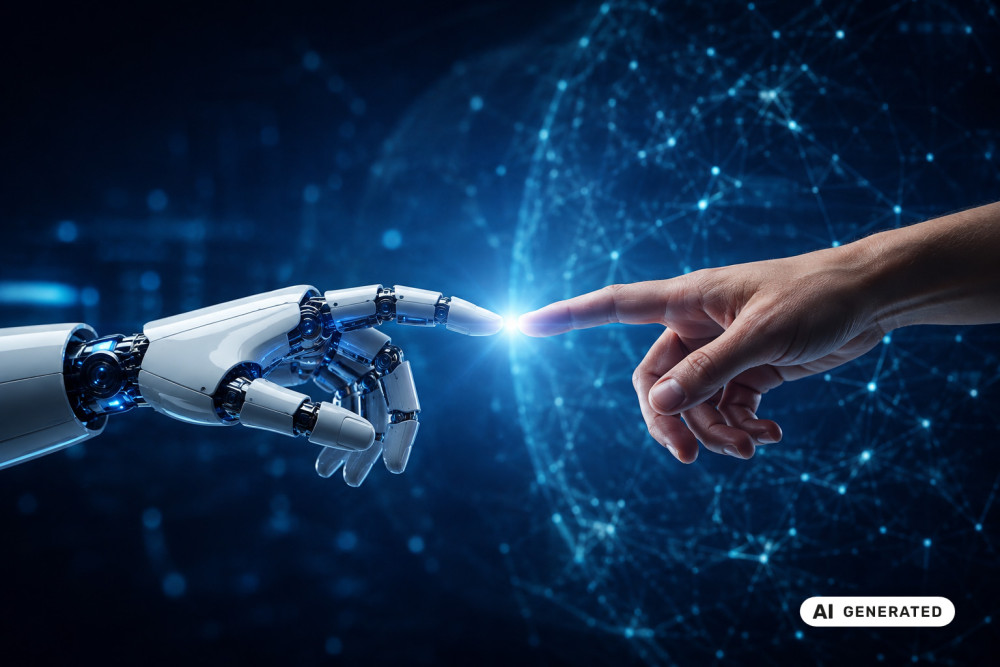
human and robot hands touching (in a reference to Michelangelo’s ‘The Creation of Adam’)
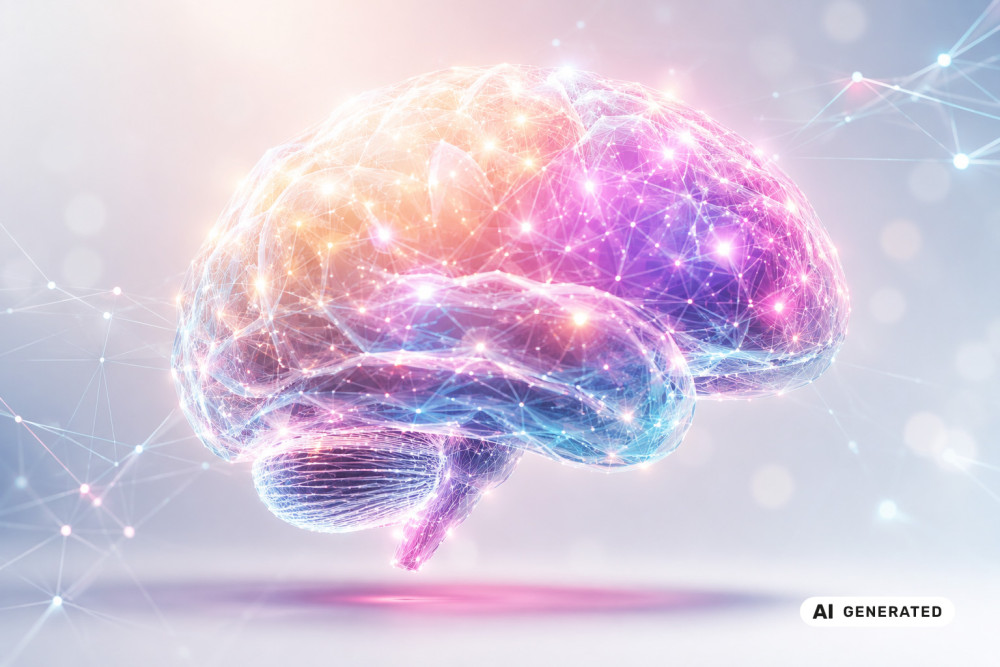
digital brains
cool, neutral colours such as blue, white and black
Why clichéd stock images on the subject of AI are a problem
As a professional communicator, you know that stock images influence how a lay audience thinks and feels about a particular topic. Unfortunately, however, our collective language surrounding AI is full of clichés. This is a problem for the following reasons, amongst others:
Abstract or science-fiction-inspired images prevent us from recognising how AI is already being used in the real world today.
Equating human and machine ‘intelligence’ fuels unrealistic expectations about the capabilities of AI.
Portraying AI as self-aware, human-like robots obscures the responsibility that people bear for their work with AI.
The most intuitive argument against clichés in AI storytelling, however, is this: they are generic, fail to tell stories that hold the audience’s attention, and get lost in the crowd. For PR, which thrives on public attention, this is a death sentence.
Are you looking for help with content marketing? Get in touch. Drawing on our expertise, we’d be happy to offer you the right advice and support to help you put your plans into action.
That’s why visual storytelling about AI so often goes wrong
Full disclosure: even here at PIO, we’ve resorted to such stereotypical images in our work. So if you’ve been just as ‘guilty’ – no hard feelings.
But why is visual storytelling about AI so simplistic and why does it go wrong? Here are a few possible reasons:
Meta-ignorance: Clichéd images of AI are everywhere. Public discourse is dominated by hype. Sober, factual information is scarce. In short: we all suffer from so-called ‘meta-ignorance’: our knowledge of AI is not only limited, but so narrow that we don’t even realise HOW limited it is. So we simply don’t know what we don’t know – and fail to recognise how influenced our visual language is.
Convenience: Because clichéd images of AI are everywhere, they become particularly strongly associated with the topic. They tell the audience that an article, for example, is going to be about AI even before they have read the first sentence. This makes them a convenient ‘shortcut’ to avoid the challenge of finding the ideal visuals for AI-related content.
Lack of resources: Content production is fast-paced. Content often has to be finalised and published by a fixed deadline. As a result, the issue of visualisation frequently becomes an afterthought or a last-minute task. This prevents visual storytelling from receiving the attention it deserves.
Are you working in an innovative sector? Our PIO BEYOND team will help you captivate your audience, even when dealing with complex topics.
Using images to communicate better about AI – Questions you should ask yourself
If you want to visualise your content on the topic of AI more effectively, we recommend that you ask yourself the following questions when creating or selecting suitable images:
Necessity: Is the aim to illustrate AI? Or is it actually about something else entirely? AI plays a role in many pieces of content – but not necessarily the central one. For example, is the piece about an AI-powered dashcam that alerts lorry drivers if they’ve forgotten to fasten their seatbelts? In that case, AI is probably not the central theme at all – it’s more likely to be about data protection or road safety. You should therefore check carefully with every piece of content whether AI is even ‘worth’ featuring prominently in your visual storytelling.
Accuracy: What exactly is the type of (AI) technology involved? Not all AI is the same. A chatbot such as Claude or ChatGPT is something entirely different from the AI that helps hospitals detect tumours hidden in ultrasound images, or that selects targets for air strikes during a war. Your visuals should therefore depict as accurately as possible the reality of where and how AI is actually used.
Honesty: Does the image show what AI can actually do, and nothing more? The capabilities of AI are regularly exaggerated in reporting – including in visual representations. The depiction of a digital brain, for example, suggests that artificial intelligence possesses consciousness, or that its functioning is comparable to human thought. Neither is the case. In your visuals, you should therefore take care not to make false promises or pander to cheap hype.
Humanity: Does the image show that AI is created by and for humans? AI systems are software. Even if agents appear to carry out certain tasks autonomously, they are still controlled by external factors. They are prompted and do not reflect on their actions. This means that, as humans, we continue to bear responsibility for the results we produce using AI. Your visual storytelling should take this into account and portray people as active users of the technology.
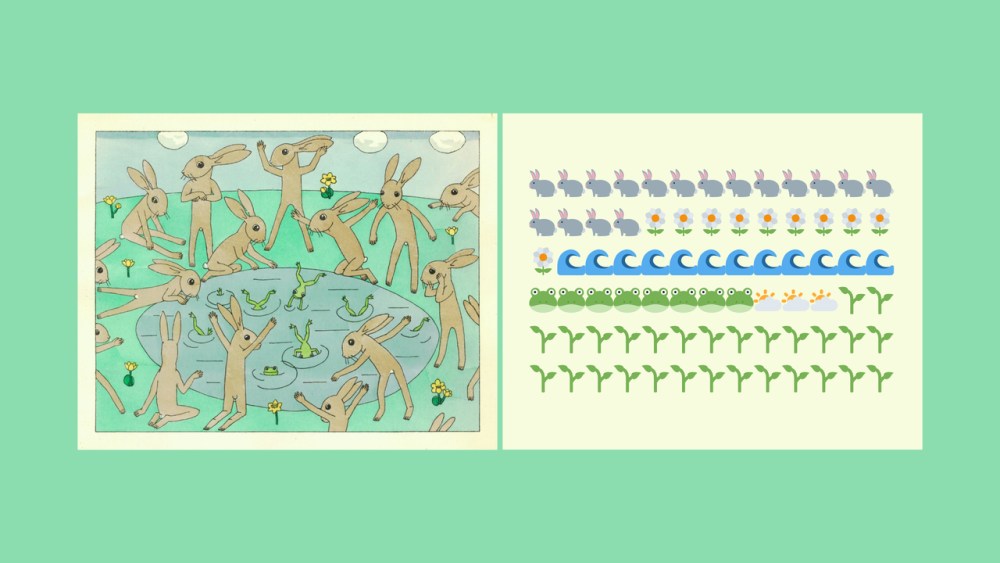
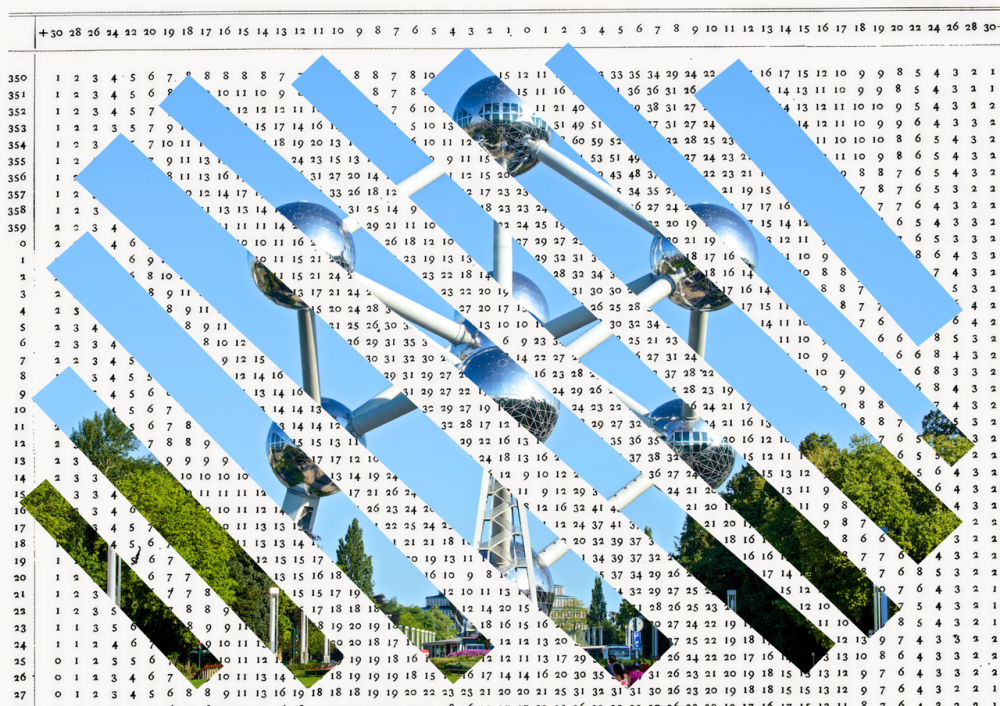
Anna Riepe & FARI / https://betterimagesofai.org / https://creativecommons.org/licenses/by/4.0/
Find of the Month: Better Images of AI
Fortunately, you’re not alone in facing the challenge of translating AI topics into engaging visuals. As an agency specialising in innovation communication, we’d be happy to help you develop a suitable storytelling approach. In the meantime, we recommend Better Images of AI. This non-profit initiative is part of the NGO ‘We and AI’, which aims to promote, facilitate and strengthen critical thinking regarding AI. Through Better Images of AI, it aims to contribute to better visual storytelling around AI – and has compiled a Creative Commons database to this end. They’re doing a lot of things right with this. Better Images of AI
Avoids the common clichéd images of AI;
Provides images that are free from hype, show the real-world impacts of AI and do not overlook human responsibility for AI;
Offers images by a diverse range of creatives, featuring a broad spectrum of different yet recognisable styles.
What this means for you is that the next time you’re looking for a suitable image or graphic, all you need to do is open the database, find a suitable image (there’s a handy search function) and select it – all for free. Just don’t forget to provide the appropriate image credit. And if you can’t find a suitable image? Then why not just let the database inspire you anyway. For us, it’s the find of the month!
Did you enjoy this blog post? If so, you might also be interested in:


Benedict Rehbein
Benedict Rehbein is the founder and managing director of PIO, the PR agency that asks. With the slogan “What matters?”, PIO communicates what really counts for its clients. Benedict has received awards such as the German PR Report Award for his work.
Featured image: Anna Riepe & FARI / https://betterimagesofai.org / https://creativecommons.org/licenses/by/4.0/